
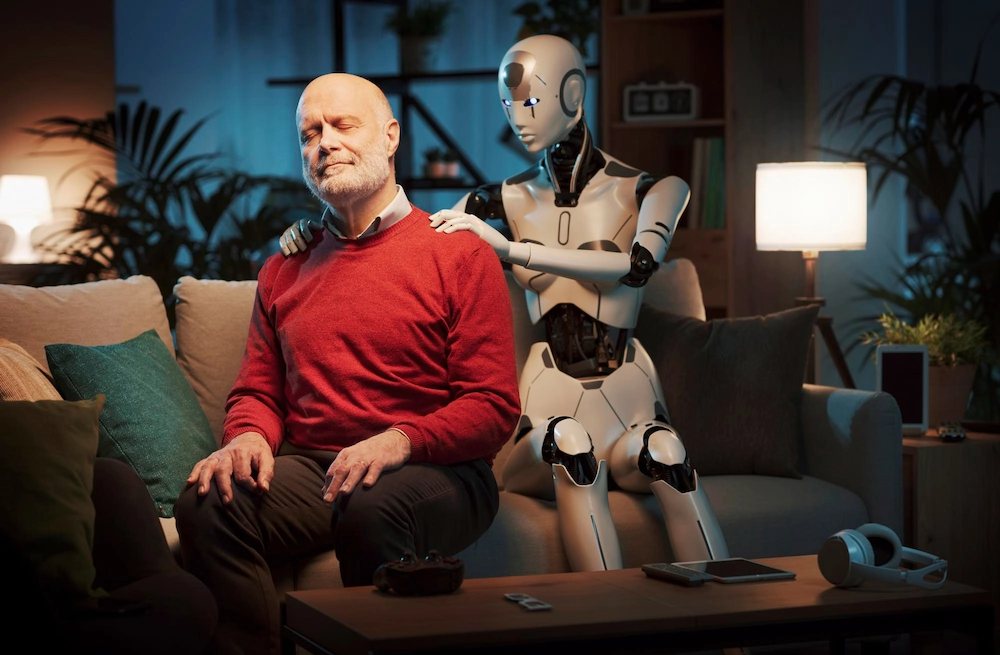
With recent changes in our world towards digital inclusion in almost every sector and industry there is, people too have slowly started adapting to this change. The most recent ongoing concern would be the shift towards AI therapists. As AI continues to evolve, so do people’s habits and mindsets. People have started talking to AI bots about their problems or mental health issues, rather than going to a therapist. This is a growing concern, and the question arises: Are human beings starting to feel more vulnerable towards AI rather than seeking help from experienced therapists?
There are a few reasons why people might be more open with “AI-therapists” rather than actual therapists. Firstly, it could be that people feel that AI are less likely to be judgmental, which may make them feel safer as they won’t have to worry about feeling weak or embarrassed in front of a real person. Secondly, AI is easily available to a person 24/7. People don’t need to book an appointment; they can simply just rant out or share their feelings with an AI at 2:00 am. Moreover, people often use AI not because they just want to vent, but because, oftentimes, people just want to be heard and to be seen, and this is something which AI does. Additionally, with an AI, a person may feel that they can talk to the chatbot about anything without being misunderstood because of the way they talk.
The answer to this question is no, at least not fully. While it may seem like AI is replacing therapists, it is likely not going to in the future. This is because no matter how advanced AI gets in the future, it still cannot produce the same level of emotions, nor can it understand human emotions to the extent that a normal human does. An article by Stanford University, specifically by Stanford Institute for Human‑Centered Artificial Intelligence, named as “Exploring the Dangers of AI in Mental Health Care” talks about this same question and has concluded that while AI tools may improve access of therapists for people where there is unavailability of therapists, these AI bots still lack the nuance, emotional intelligence, and the judgement required to actually give any advice and listen to a person like a trained mental-health professional.
It’s confusing to say the least, because many people see a lot of benefits in just telling AI about their problems rather than going to an actual therapist, but here’s the catch: How much will AI even help? AI is not the long-term solution, and oftentimes, they forget what people are talking about. Humans remember and they feel you, empathise with you, and understand you more than any AI chatbot can. Thus, if you are struggling with any mental health-related issues, then it is best that you seek professional help instead of ranting about your issues to AI. Seek a well-trained and professional therapist who will understand you and try to help you.
The answer to the question “Is AI replacing therapists?” has no proper answer because there’s no certainty. While it is said that AI is very helpful for us humans, it would still be better if a person seeks proper help rather than help from AI. This is because we humans have been created in a way that we can connect emotionally with one another, and that’s something no AI can do to this day. So, to sum it up, the answer to the question would be no. In the future, we can see that while AI will not replace therapists, it will, however, change how therapy is accessed and used.
A: No, AI is not fully replacing therapists. While AI tools such as chatbots are increasingly used in mental health support, they cannot replicate the depth of emotional intelligence, nuance, and judgment that human therapists provide. According to a study by Stanford's Institute for Human-Centered Artificial Intelligence, AI tools may help with access to mental health support but still lack the complexity required for meaningful therapeutic engagement. Stanford Institute for Human-Centered AI
A: There are several reasons why people may feel more vulnerable when talking to AI. One primary reason is the perceived non-judgmental nature of AI. AI doesn't show facial expressions or emotional reactions, making it easier for people to open up without fear of being misunderstood or judged. Moreover, AI is available 24/7, allowing individuals to speak their minds whenever they need, without the need for appointments. However, this vulnerability may also stem from the illusion of safety AI provides, creating a space for people to express themselves more openly.
A: AI chatbots can be effective in providing initial support and mental health awareness, especially for people who need quick advice or guidance. Chatbots like Woebot, Wysa, and Replika are designed to offer basic mental health resources and coping strategies. However, they are not a replacement for human therapists and should be used as supplements for light emotional support or when professional help is not immediately accessible. Research on chatbot-based therapy suggests that they can provide short-term relief but fall short for long-term therapeutic intervention.
A: AI can support mental health in several ways:
However, AI tools cannot replace personalized human interaction or address complex mental health conditions.
A: AI therapists, like any mental health technology, come with risks. The biggest concerns include:
Experts advise that AI chatbots can be safe for general advice and as a mental health support tool, but they should not replace professional therapy, especially for those experiencing significant mental health challenges.
A: AI therapy cannot fully replace traditional therapy for individuals who require deeper, more specialized care. Mental health therapists use advanced therapeutic techniques, offer empathy, and understand emotional nuances, which AI cannot replicate. AI tools may be helpful for managing mild symptoms or as an initial intervention, but they are not equipped to handle complex cases involving trauma, severe anxiety, or depression.
If you are experiencing serious mental health issues, it’s important to seek a licensed therapist who can offer personalized care.
A: AI chatbots might be useful if:
However, if you are dealing with more complex emotional issues, trauma, or persistent mental health challenges, it is advisable to seek professional therapy. Chatbots should not be seen as a replacement for therapy.
A: Here are some popular AI tools designed to assist with mental health:
These tools offer immediate support, but they are not substitutes for clinical care.
A: AI can be trusted for basic emotional support, but it should not be used as a primary source of therapy for serious issues. Many people find that speaking to an AI chatbot provides comfort in the short term, but for long-term healing, professional therapy is essential. AI lacks the ability to form the same genuine emotional connection or offer the personalized care that human therapists can provide.
A: Yes, AI will likely continue to evolve and play an increasing role in mental health care. However, while AI can provide valuable support, it will not replace human therapists. Rather, AI will serve as a complementary tool to enhance accessibility, provide initial support, and expand resources for people who may not have access to traditional therapy.
